


Security Guard Training
Who can get a security guard licence?
To be Eligible for a Security Licence:

Must be at least 18 Years of age
Must be eligible to work in Canada
Must have a clean criminal record
Complete 40 Hour Training from a Ministry Approved Provider
The Basic Training course is a 33.5 hour self study on-line course plus an in Class Emergency First Aid with CPR or Standard First Aid with CPR provided through RSMac Consulting Inc.'s Learning Centre partner.
Once completed a Training Completion Number will be provided. This is what is used to book the licensing test.
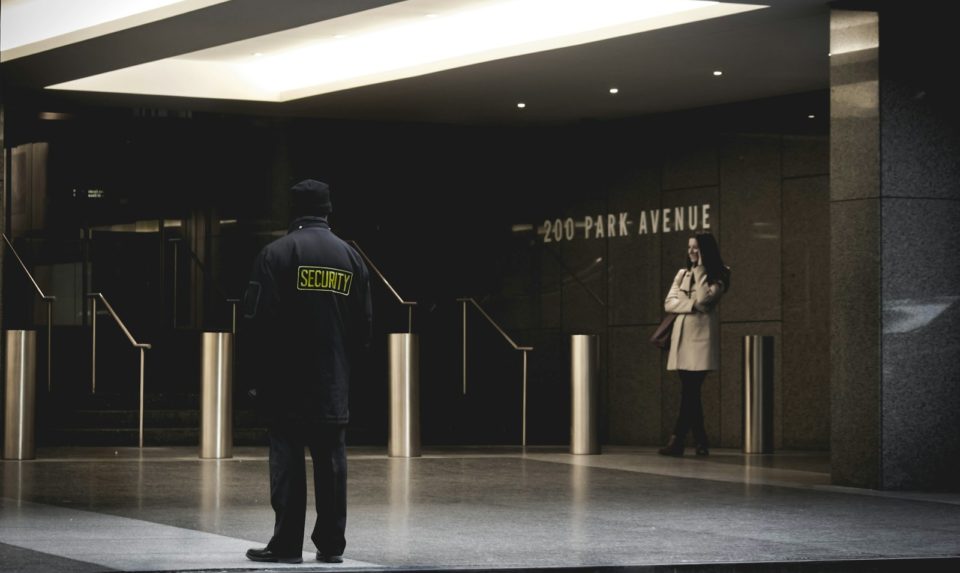
About the Course:
This specialized 40-hour course meets the syllabus requirements of the Ministry of Community Safety & Correctional Services. (MCSCS). The course is delivered 100% online and is accessible 24/7, which allows students to complete the course on their own time and has been updated to reflect any recent changes in relevant legislation.
As a Security Guard in Ontario, you may face a variety of challenging situations that require you to apply your training effectively and professionally. RSMac Consulting Inc. offers a comprehensive Security Guard training program that is aligned with the Ministry of the Solicitor General’s 40-hour training syllabus and meets provincial requirements. Our curriculum also provides the practical knowledge and tools needed to help you succeed in the security industry.
What you will learn:
All new Security Guards must complete a basic training course and pass the provincial licensing exam before applying for a licence. The basic training course must be at least 40 hours in length and include the required First Aid/CPR certification. First Aid/CPR training components are delivered separately, with certain modules completed online.
The basic training program aims to ensure all security guards in the province of Ontario have the knowledge and skills to carry out their work professionally, effectively, safely, and lawfully.
Private Investigator Course Syllabus
1. Introduction to the Security Industry
The trainer provides a summary of the principal duties and responsibilities necessary to work effectively in the security industry. Students will learn to interpret and comply with the legal requirements of their occupation as well as identify job roles and responsibilities
2. The Private Security & Investigative Services Act, 2005. (PSISA) & Code of Conduct
The Private Security and Investigative Services Act, 2005 regulates the security industry. As such, security guards must be familiar with the Act to ensure that they follow the Act and its regulations, including the Code of Conduct and associated prohibitions. The trainer introduces the legislation to the student by outlining all relevant components and explaining the Code of Conduct.
3. Basic Security Procedures
Security guards need to respond to changes in their environment, which includes actions such as traffic movement, ensuring the safety of persons between and within locations, monitoring and managing the access and departure of persons and vehicles and observing and monitoring people. Security guards need to be aware of the correct way to deal with these situations. The trainer provides his/her students with the knowledge and skills to assess the security of physical environments, to apply basic aspects of security in their roles and to assess the impact of drug use in the context of safety for oneself and others.
4. Report Writing
Security guards are required to complete written reports of occurrences, duties performed, and comprehensive descriptions of their tasks/observations. The trainer instructs the student how to write reports that are objective and standardized.
5. Health & Safety
The policies and procedures of the Occupational Health and Safety Act (OHSA) and the Workplace Hazardous Materials Information System (WHMIS) are necessary to ensure the occupational safety of security guards and those they interact with. The trainer identifies how to control workplace risks and hazards, how to apply appropriate responses to emergency situations and how to communicate workplace safety requirements.
6. Emergency Response Preparation
Security guards are expected to respond to emergency situations and to minimize the impact caused at a worksite. They may be required to perform a variety of duties during emergency procedures and must understand the importance of scene management. The trainer will address the potential roles of a security guard during an emergency situation and how to effectively complete these tasks.
7. Canadian Legal System
Security guards work within the Canadian Legal System. They need to be familiar with the Criminal Court System, the Ontario Evidence Act, the Canada Evidence Act and how these apply to their positions to ensure the information they obtain is admissible in court. The trainer outlines the difference between criminal, provincial and municipal law as well as case and common law, the hierarchy of the court system and offences and the requirements for the admissibility of evidence.
8. Legal Authorities
The trainer focuses on the broader legal context of private security to instruct the student on his/her rights and limitations when performing duties as a security guard. The trainer will also explain where a security guard derives his/her authority to carry out job functions.
9. Effective Communications
Security guards encounter a wide range of situations and are required to act professionally under all circumstances. The trainer reviews the interpersonal and communication skills necessary to adapt to different environments/scenarios and to diffuse situations when required. The importance of using communication to one’s advantage should be emphasized.
10. Sensitivity Training
Security guards often interact with the public on a daily basis. It is important they approach individuals with respect to avoid any biases that may impact how they interrelate with others. The trainer addresses prejudices against ethnic backgrounds, persons with mental or physical disabilities and gender and sexual orientation.
11. Use of Force Theory
Security guards may be required to use force during certain situations. The trainer explains use of force theory, the components of the use of force model and how to maintain composure during potentially stressful situations. Students need to attend specialized training to learn how to use defensive equipment and to apply use of force options.
12. First Aid/CPR (separate booking & cost)
How to register to write your exam before applying for your licence
Before you apply for a licence, you must take the security guard Basic training course, plus Emergency Level First Aid AND pass the security guard basic test, and have received your training completion number.
Testing is done through Service Ontario centres across Ontario and testing is done based on availability. (A fee will be charged for the test)
The ministry exam consists of 60 multiple choice questions. You will have 75 minutes to complete the exam, and you must score at least 63% or higher in order to pass. (One can take it again as many times as necessary. You must pay a fee each time)
- Please note that Service Ontario does not accept applications at its service counters.
- Applications can take up to 30 business days to be processed.
- Test results are available within 2-3 days of taking the test.
- Ontario Security Guard study guide (click here)
For more information on writing the security guard and private investigator basic testing exam, please visit the Ministry of the Solicitor General website.

Applying for a licence
A properly completed online licence application is typically processed within up to 15 calendar days.
Applicants must submit an original, unaltered digital PDF of their Criminal Record and Judicial Matters Check to apply online. Once approved, your digital licence will be issued by email. Physical licences are not provided; however, you may download or print your licence through your My Ontario Account.
Government application fees apply.
Jobs in Security
Security guard licensing opens the door to a wide range of career opportunities across public, private, and institutional sectors throughout Canada.



Security Guard Course:
Additional Security Courses:




Q&A
What type of work can I do with a security guard licence?
A security guard licence allows you to work in a job where you mainly protect persons or property.
This includes working as a:
• security guard
• bodyguard
• bouncer, or
• loss prevention employee.
Who is responsible for getting my licence – me or my employer?
Security guards and private investigators are responsible for getting a licence and for renewing it before it expires.
How can I get information about the status of my application?
If you apply online you will be able to check the status of your application online within two business days through your ServiceOntario account. If you apply by mail, you may contact the Ministry of the Solicitor General for an update. Please keep in mind that it can take up to 30 business days to process an application.
Can I get a licence that allows me to work as both a security guard and a private investigator?
Yes. In order to get a dual licence, you must complete both basic training courses (or a dual course) and pass both tests. Contact RSMac Consulting about a discount on dual training modules.
What identification documents do I need to submit with my application?
You will need copies of two separate pieces of valid identification. One piece must prove that you are eligible to work in Canada. The other piece should be government issued and feature a photograph, your full legal name, your signature and your date of birth.
If you are applying by mail, you will need to submit photocopies of these documents. For online applications, you will need to scan these documents and have them ready to upload before you begin the application process.
Acceptable identification documents are listed in the application instructions on the web site
Can I get a licence if I have a criminal record?
The Eligibility to Hold a Licence - Clean Criminal Record regulation lists over 80 different offences that prevent you from getting a licence, unless you receive a pardon. These are known as prescribed offences.
Within five days of being convicted of a prescribed offence, you must update your criminal record information online or by completing a Change of Information Form and submitting it by mail.
For information on how to receive a pardon, contact your regional Parole Board of Canada office.
How often do I need a criminal record check?
A criminal record check will be done when you apply for a new licence and every time you renew your licence.
Within five calendar days of being convicted of a prescribed offence, you must update your criminal record information online or by completing a Change of Information form and submitting it by mail.
I already have a security guard or private investigator licence from outside of Ontario. Do I need an Ontario licence to work in Ontario?
An Ontario licence is required in order to work as a security guard and/or private investigator in Ontario. If you hold a valid security guard licence or private investigator licence from another province or territory and if that licence was issued to you after successful completion of training and/or testing you may be exempt from training and testing in Ontario.
Can I work as a security guard or private investigator if I’ve completed all of the necessary steps, but my licence card hasn’t arrived in the mail yet?
You must have a valid licence card to work as a security guard or private investigator. Working without a valid licence is a violation of the Private Security and Investigative Services Act and may lead to charges.
What testing accommodations can be made for people with disabilities?
The test provider, Serco DES Inc., meets the requirements of the Accessibility for Ontarians With Disabilities Act, 2005, which includes appropriate accommodation to ensure individuals with disabilities have equal access to testing services.
What is a digital licence?
If you apply for a licence online through ServiceOntario, you will be able to access a digital licence through your online account as soon as your application is approved.
The digital licence includes a QR code which can be used to verify the information printed on the licence. You must replace the printed digital licence with your plastic licence card once it arrives by mail.
Will I get a certificate at the end of my Basic Training Course?
RSMac Consulting Inc. will provide students with a training certificate once the student successfully completes the training for security guards. Training certificates will include the following information:
• Student name;
• Training entity name;
• Type of training completed (i.e., security guard and/or private investigator);
• Date training completed; and
• Signature of training entity representative.